

Fastening Points
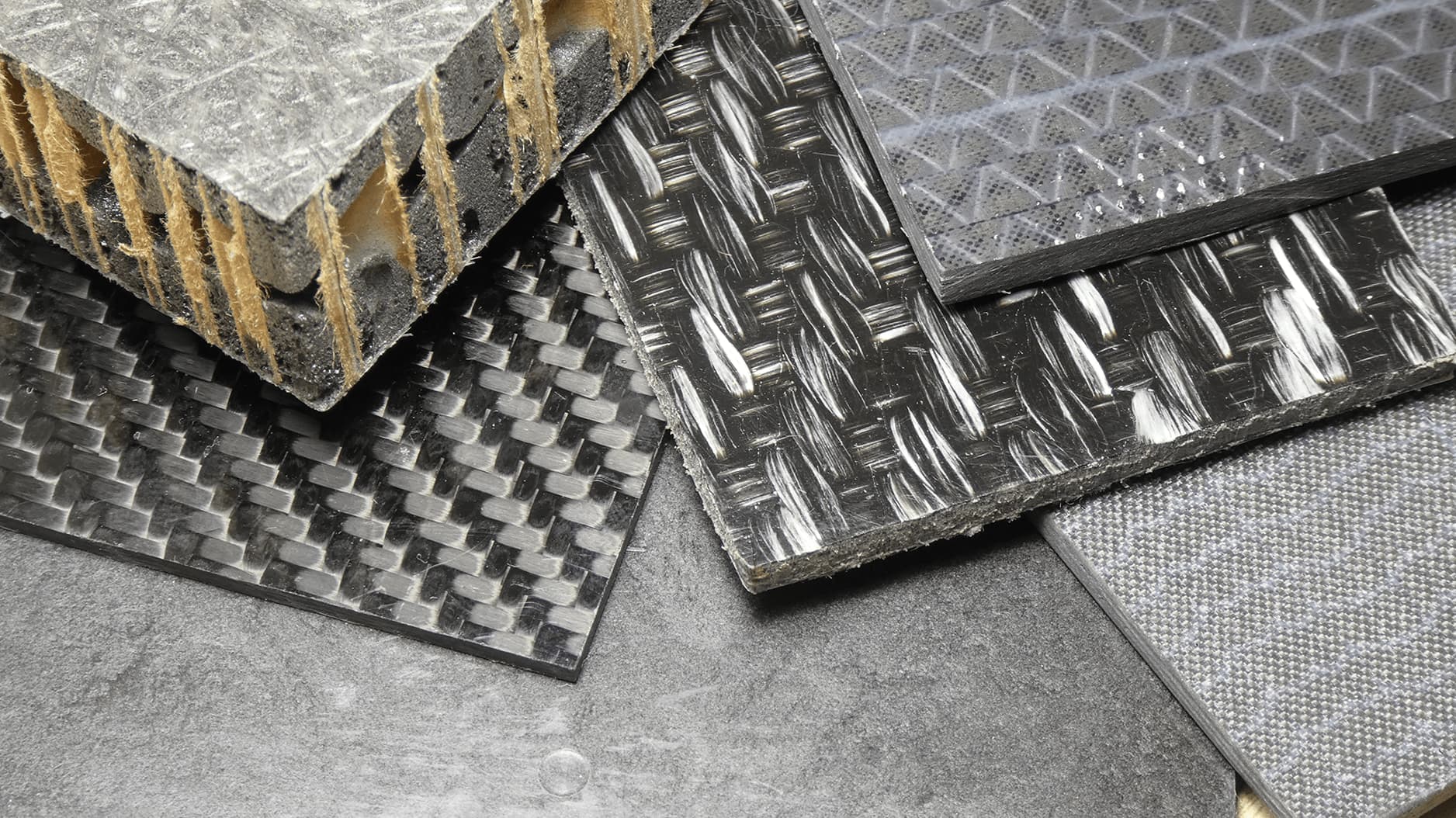
Why materials should drive your fastening decisions
When you start to encounter fastening challenges, you might naturally begin comparing fastener types.
Threaded inserts, adhesive bonded fasteners, embedded fasteners, welded fasteners, rivets, rivet-nuts, clips and simple screws all offer different advantages.
Choosing between them can feel overwhelming when they’re all valid solutions.
At this point, however, your most important next step isn’t choosing a fastener. It’s understanding the materials you’re fastening.
Materials have more influence than many people realise
Fastening performance is largely dependent on how the system responds to combinations of tensile and shear loading, and how the fasteners introduce load into the materials around them.
Anisotropic materials, like fibre reinforced polymer (FRP) laminates, can respond differently to fastening loads compared to isotropic materials like injection moulded polymers. As a result, the design rules and loading expectations vary between material types.
These rules and limitations can also be significantly different to those of established metallic fastening techniques.
The same fastener can behave differently during assembly and application loading, depending on whether you install it into a metallic material, a composite laminate, or a sandwich structure. The different material properties influence both in-service performance and assembly survivability of the fastening system.
This dependency on materials is also why established metallic fastening designs do not always carry over perfectly to composite and plastic materials.
Why stronger fasteners are not always better
As design loads increase, it’s often tempting to focus on fastener strengths. However, the ‘best’ fastening solution is not always the one that offers the highest ultimate loading capability.
During the early design stage, it’s more important to understand how the fastening system distributes loads into the fastened materials and how the fastening elements interact, than to understand fastener load limits in detail (this comes later).
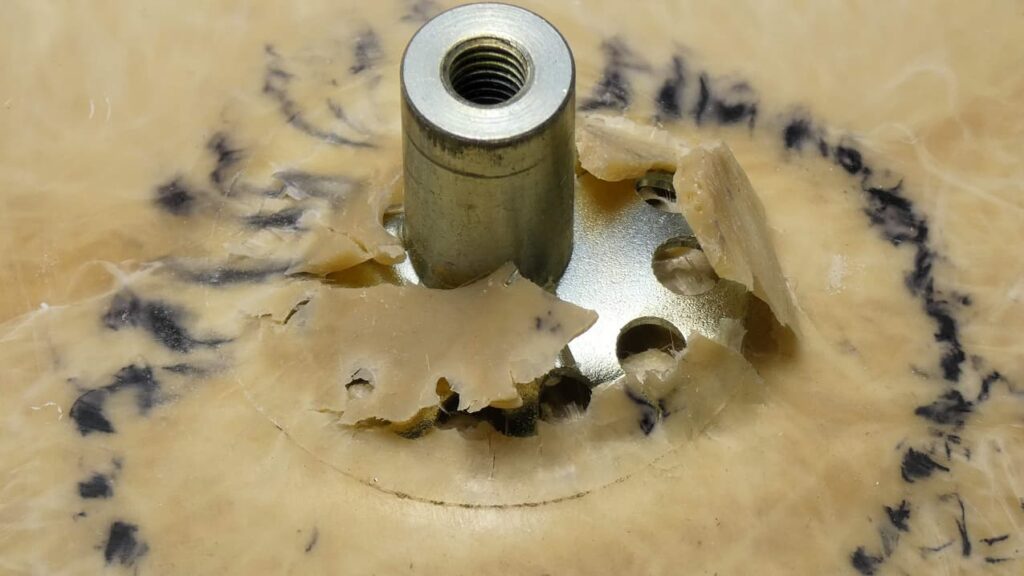
Increasing fastener strength provides little benefit if the surrounding material fails first
The fastener is only one part of the load path. Loading does not always occur solely during service. Assembly operations and clamp forces can impart significant loads on the fastening system.
For some materials, their compressive strength is insufficient to withstand even relatively low clamp forces. And if the surrounding material fails first, increasing fastener strength may provide limited practical benefit.
For example, if a thin laminate material cannot accommodate bosses for threaded inserts, there’s little point comparing the load-bearing capacity of different fasteners.
Instead, the question should become: which fasteners can be practically integrated into the material and manufacturing process?
Fastening design involves manufacturing decisions
You will either use fasteners to create attachment points within a component, or to directly fasten components together. In either case, the optimum solution usually balances loading requirements with effective and efficient integration into the manufacturing process.
There’s rarely a single choice when deciding how to fasten an assembly. The decision is usually a trade-off between considerations like:
- Installation time
- Secondary operations
- Throughput
- Process constraints
- Logistics constraints
For example, whether the installation process is easily automatable can be a key decision driver between otherwise similar, and less differentiable solutions.
Start with the material, then develop your fastening strategy
It’s a very common scenario to find yourself faced with deciding which fastening type to use, with no obvious way forward. To help with this, we recommend approaching it in the following order:

1. Understand the material
- Structure/format
- Thickness
- Composition
- Behaviour under load
2. Understand the assembly requirements
- Serviceable, or permanently fixed
- Accessibility (installation and in-service)
- Static and dynamic loading
- Operational environment
3. Understand the installation implications
- Direct assembly (e.g. screws, ultrasonically welded devices, rivets and clips)
- Fasteners that join materials directly, with reusability depending on the specific type
- Integrated fastening points (e.g. embedding fasteners and mould-in inserts)
- Fasteners that you install during manufacture or moulding, and become part of the component’s structure
- Added fastening points (e.g. rivet-nuts, threaded inserts, captive fasteners, nut plates, clip-nuts, surface bonded and welded fasteners, ultrasonic inserts and compression limiters)
- Fasteners that you install into the component after the forming/manufacturing process, to create a fastening point

How a bigHead fastener integrates into dry CFRP reinforcement material
4. Select and refine the solution
Once you’ve identified the fastening approach most likely to work for your application, you can begin evaluating fastening technologies in terms of loadability limits and how the design will respond during both assembly and operational service.
Every fastening design and material combination behaves differently. At this stage it’s normal to seek additional information, specialist guidance, or expert support to confirm suitability and refine the design.
Your objective during early design should not be to identify the perfect fastening solution immediately. Think instead about improving your confidence that you’re asking the right questions.
Once you fully understand your material, application requirements and assembly constraints, selecting and refining a fastening solution becomes more straightforward.
Assembly and installation processes have implications for your fastening strategy
Understand the materials first, ask the right question next
You might be wondering whether a bigHead solution is appropriate for your application. The most helpful question you can now ask depends on the materials you’re working with.
Polymer moulded materials:
Are moulded bosses creating design, assembly or durability issues?
- If yes, there may be an opportunity to explore bigHead and alternative solutions.
- If not, threaded inserts may remain the optimum solution for you.
- If you’re unsure, we can help you evaluate both approaches.
Sandwich materials:
What matters most in your process: installation speed or fastening performance?
- Different priorities can lead to different fastening approaches.
- Where installation automation and throughput are critical, alternative technologies may be worth considering.
- Where design flexibility and load transfer are primary concerns, a bigHead solution is often most appropriate.
If your fastening involves other materials, and you need help ascertaining fastening suitability, you can contact us.
If you do decide on a bigHead solution, we can help you in three ways:
