

Fastening Points
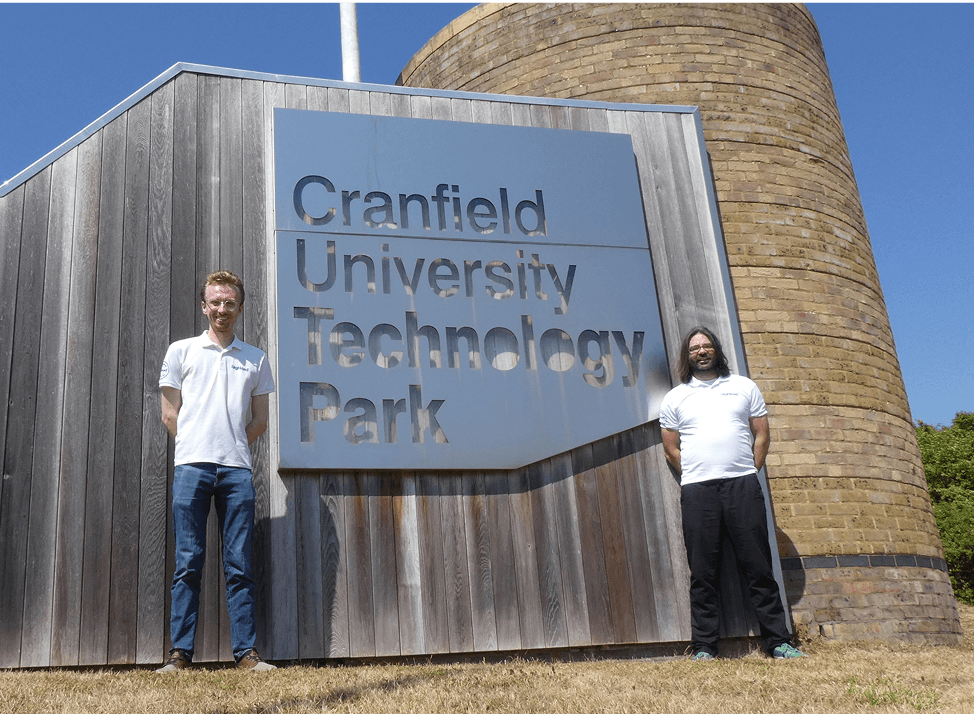
Meet the engineers behind bigHead’s fastening Guidance
We’re Lawrence and Oli, the development team at bigHead. Our role is to help people make good fastening decisions without needing to be fastening experts. We do that by publishing clear, practical Guidance on fastening topics, and by supporting customers directly when their applications need deeper investigation.
Why we created Guidance
bigHead has spent over half a century designing and manufacturing fasteners known for strong welds and reliable performance. But as modern applications evolved, customers faced new challenges, such as composite materials, thin laminates, controlled torque environments, and multi-stakeholder assembly processes.
Often, to arrive at the right solution, customers needed more than a fastener. They needed to understand how it behaves as a fastening in their specific application.
We wanted to make fastening simpler.
Fastening is a niche topic, and many engineers aren’t taught it formally. While bigHead’s products were strong, the knowledge around how to use them needed to be made just as accessible. We wanted to make fastening simpler.
How we develop Guidance
bigHead invested in building the capability to support customers the way we do today. We were brought in to deepen the company’s understanding of the processes customers needed to put our fasteners through.
We spent a full year analysing enquiries.
To understand what customers needed, we spent a full year analysing enquiries. We looked for patterns: the same questions asked in different ways, recurring uncertainties, common obstacles. Those patterns formed the framework of the Guidance we offer today.
We think of Guidance like a jigsaw puzzle. We research and verify our own understanding until a whole topic area makes sense, and only then do we publish it. Everything we create is based on making sense of real problems customers face, and the picture keeps evolving.
In recent years, we’ve also standardised bigHead’s product range, producing Technical Data Sheets and aligning products with established standards where possible. This has made it easier for customers to compare and specify fasteners with confidence.
 |
 |
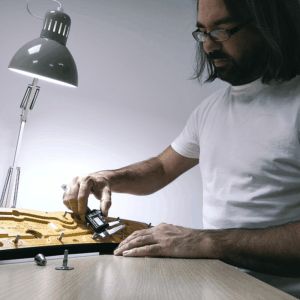 |
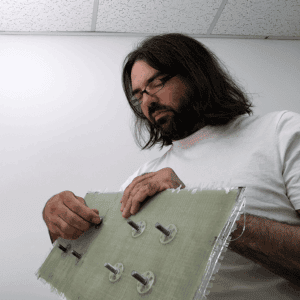
| Oli and Lawrence at work in the lab at Cranfield | ||
Our engineering approach
We both come from research backgrounds, and that mindset shapes how we work with customers, how we collaborate with partners, and how we validate ideas.
When a customer brings us a fastening challenge, we don’t approach it with preconceived assumptions. We test things until we understand them. Sometimes that means following established standards; sometimes it means trial and error. We’re always ready to get down to the lab and give something a try.
We combine theory and application until we have practical answers for the customer.
Lawrence often starts by building the framework and working out what needs to be understood. Oli then goes deep into the theory, working through calculations, tolerances and loading behaviour. Experimental testing provides data to support our understanding. We combine theory and application until we have practical answers for the customer.
Guidance is not about claiming to know everything. It’s about helping customers navigate uncertainty. Sometimes that means providing answers ourselves; sometimes it means connecting customers with trusted specialists who can contribute expertise beyond our own experience.
A shared understanding of material properties underpins all this: how materials are characterised, how they relate to performance and loading, and how they behave inside real assemblies. It’s the common language we use to solve problems.
Our backgrounds
Lawrence’s background is in composites, design thinking, R&D, and adhesives, built up at Cranfield University and Scott Bader. His career has focused on presenting information clearly, developing processes, and turning complex ideas into logical, usable frameworks. He brings the application‑focused mindset: how to test something, how to interpret results, and how to explain them in a way that makes sense.
Between us, there’s not a lot we can’t work out how to solve – or know who to ask.
Oli comes from an automotive engineering background, a world of calculations, stress analysis, material behaviour and performance limits. His applied research at Cranfield University gave him early exposure to the kinds of challenges bigHead customers face, such as how to integrate fasteners into composite structures, how materials behave under load, and what happens when a fastener is tightened. He brings the theoretical foundation that lets us understand what a fastener is going through.
Our complementary backgrounds mean that between us, there’s not a lot we can’t work out how to solve, or know who to ask for help.
How we work today
When someone comes to us with a fastening problem, we break it down and guide them through the process. If there are several ways to solve it, we explain the decision-making pathway to choose the best solution.
Customers get consistent answers from engineers who specialise in fastening behaviour and materials.
To give customers a clear point of contact for technical questions, we formed a dedicated front-office development team. Complex enquiries come straight to us, so customers get consistent answers from engineers who specialise in fastening behaviour and materials.
Bossard helped us to shape this structure. They’ve spent decades refining their approach to customer support. Their expertise helped us implement a system that gives our customers the smoothest experience.
Where the work happens
Though we often visit the Verwood factory, we can usually be found at Cranfield Innovation Centre. This gives us the space to focus on testing and problem‑solving, and allows for invaluable knowledge transfer and collaboration with Cranfield University.
A bigHead isn’t just a component, it’s part of a system.
Cranfield keeps us close to applied engineering. We’re surrounded by aerospace, motorsport, and advanced manufacturing applications like the ones our products go into. It constantly reminds us that a bigHead isn’t just a component, it’s part of a system.
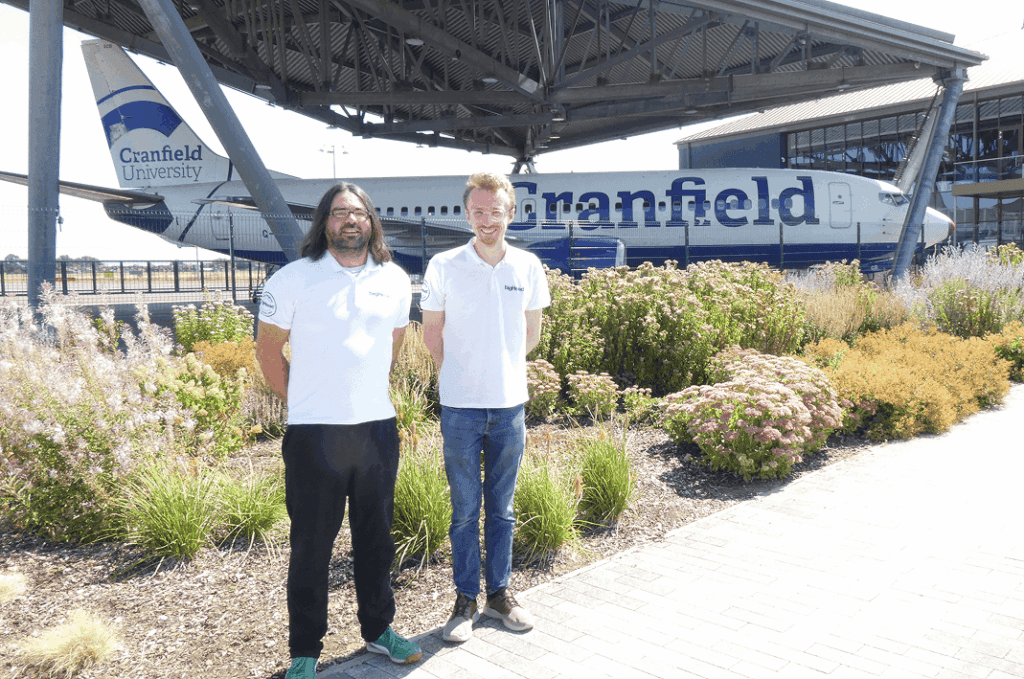
At Cranfield we are surrounded by applied engineering
As a bonus, Cranfield is a practical place to host technical discussions with customers. It’s well-connected to transport networks for anyone who wants to visit and work through their fastening challenges in person.
Guidance to make fastening simpler
You can explore our published Guidance here.
And if you’re facing a fastening challenge of your own, we’re always happy to talk it through and help you find a clear way forward. Get in touch