Fastening and assembly guides
Fastening

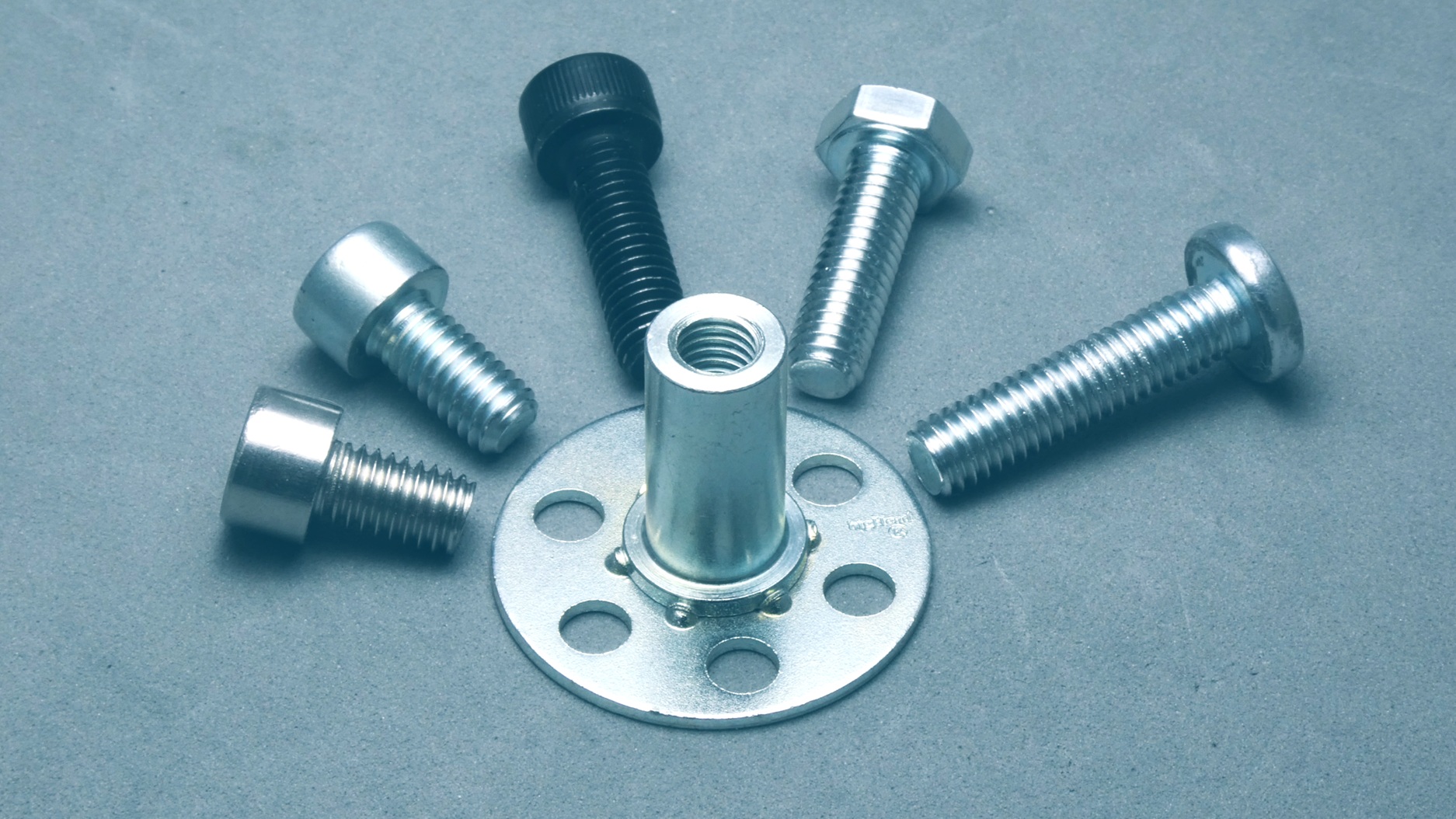
The collar fixing of bigHead F2/SF2 products uses an internal thread. Screw paring compatibility is governed by internal thread loadability and assembly tightening control, not screw strength or property-class.
This guide explains the fastening principles that determine screw pairing compatibility for bigHead collar fasteners, shows how these principles apply to F2/FS2 products, and clarifies common engineering assumptions
This guide supports engineers, designers, and assembly personnel when selecting and fastening externally threaded fasteners into bigHead internally threaded collar products.
By understanding what governs joint behaviour you can make informed fastening decisions. So, in this guide we explain the underlying fastening principles that govern compatibility, tightening behaviour, and internal thread loadability.
The guidance is principle-led, not prescriptive – so you can apply it across a wide range of applications and assembly methods.
This guide focuses on:
This guide does not provide:
You can find practical guidance on managing torque and preload during assembly in our assembly guides.
Application-specific assembly parameters should be determined using appropriate bolt-calculation methodologies where required.
We encourage you to:
By understanding the fastening behaviour of bigHead collars, you can make fastening decisions with confidence, and reduce the risk of internal thread damage, rework, or compromised fastening performance.
First, let’s look at the fundamental engineering principles used to assess compatibility between externally threaded fasteners and internally threaded bigHead collars.
Core engineering principle: preventing internal thread stripping.
Threaded joints are designed so that internal thread stripping does not occur within the intended tightening range, and fastening behaviour remains predictable under load.
There is no standardised rule that requires the internally threaded component to be of a higher (or lower) property class than the externally threaded fastener.
Instead, compatibility is achieved by ensuring the internal thread is not overloaded during tightening and service.
This principle is applied across standard fastener systems and is independent of thread size, fastener grade, or material type.
The rest of this guide applies this principle specifically to bigHead fasteners. If you’d like to explore fastening and assembly guidance for standard fastening elements (screws, nuts, etc.), we recommend the technical resources provided by Bossard.
Thread stripping is a shear-based failure of the engaged threads. It can occur in either the externally threaded fastener or the internal thread of the bigHead collar, depending on their relative strength and applied load.
From an engineering and assembly perspective:
For these reasons, avoiding internal thread stripping is the governing principle for screw/collar compatibility.
Always follow this principle for externally threaded fastener selection, and for assembly control.
To align with standard fastening terminology, the following sections use the term ‘screw’ to mean ‘externally threaded fasteners that engage with the internally threaded bigHead to clamp assembly components together’.
The resistance of the internal thread to stripping is not governed by material strength alone. It depends on a combination of factors, including:
As a result, fastener property class on its own is not a reliable indicator of compatibility.
The property class of the screw defines its material properties and strength. It does not define its compatibility with internally threaded fasteners.
Over-tightening can therefore cause internal thread damage, even when the screw remains well within its own loadability limits.
Effective screw/collar matching focuses on controlling applied load and thread engagement, not enforcing a hierarchy of fastener grades or property classes.
Reliable threaded joints are achieved by preventing internal thread stripping through appropriate thread engagement and tightening control – not by applying simple property-class rules.
Now, let’s look at how the engineering principles above apply to internally threaded bigHead products (F2/SF2 product types). We will provide context for screw selection and assembly decisions, without prescribing fixed property-class pairings.
bigHead collars are manufactured from defined material specifications. For the purposes of fastener compatibility and assembly guidance:
These equivalencies are approximate only. They are here as reference points to aid understanding of relative material strength and behaviour. They do not represent formal fastener classifications, nor do they define allowable tightening torque on their own.
Screws with property classes higher than the approximate equivalence of the collar material may be used with bigHead products, if tightening is controlled appropriately.
However:
For bigHead products, the limiting factor is typically the internal thread loadability of the collar, not the strength of the screw.
To apply the engineering principles correctly when fastening into bigHead collar products:
This approach ensures internal thread integrity within the bigHead collar. It reduces the risk of compromised fastening performance, embedment or surface bonding rework, or scrappage.
Here, we outline how to determine appropriate tightening parameters for bigHead collars (F2/SF2 product types), in line with the principles described above.
This does not replace formal bolt-calculation methods, but provides practical guidance on their correct application.
As simplified, application-independent guidance:
Follow these recommendations to uphold the principle of avoiding internal thread stripping under typical production-assembly conditions. This is essential even when using screws with a higher property class than the approximate equivalence of the bigHead collar.
Where application requirements extend beyond simplified torque limits – for example, where specific higher preload, fatigue performance, or structural load requirements exist – tightening parameters should be determined using recognised bolt-calculation methodologies.
For fastening systems with embedded or surface-bonded collars, VDI 2230-based bolt-calculation methods are one option you could use to determine tightening parameters.
VDI 2230-based calculations address:
When applying VDI 2230-based bolt-calculation methods:
This avoids overestimating joint loadability and torque-tightening capacity based solely on the screw strength.
Please get in touch if you’d like support with:
Many common fastening assumptions originate from valid engineering concerns, but can lead to incorrect decisions when applied to bigHead collar products without context. Here, we clarify these assumptions and explain how to interpret them correctly to ensure reliable fastening.
It’s reasonable to assume that selecting a lower-strength screw would reduce the risk of over-tightening damage by ensuring the screw strips or breaks before the collar thread. Using a lower-strength screw can indeed make it harder to apply excessive tightening load.
However, fastener property class alone does not determine compatibility. The internal thread loadability of the bigHead collar is the limiting factor.
Relying on screw yielding or failure is not a reliable design strategy. Once the screw begins to yield or fail, fastening integrity is compromised from that point on.
In practice, compatibility is achieved through:
Consider property class as part of the assembly system – but not as a substitute for tightening control.
High-strength screws can be used with bigHead collar products, if the applied tightening and preload is appropriate for the internal thread loadability of the collar.
The risk associated with high-strength screws is not their strength itself, but the ease with which high tightening loads can be applied, particularly with power-assisted tools.
If tightening is not controlled, internal thread damage may occur in the collar even when the screw remains well within its own strength limits.
For bigHead collar products, the internal thread loadability of the collar is typically the limiting factor, not the strength of the screw.
Torque values published for standard screws are typically based on:
These torque call‑outs do not account for the thread capacity of the internally threaded fastener, and should not be applied directly when fastening into bigHead collar products.
For bigHead collars:
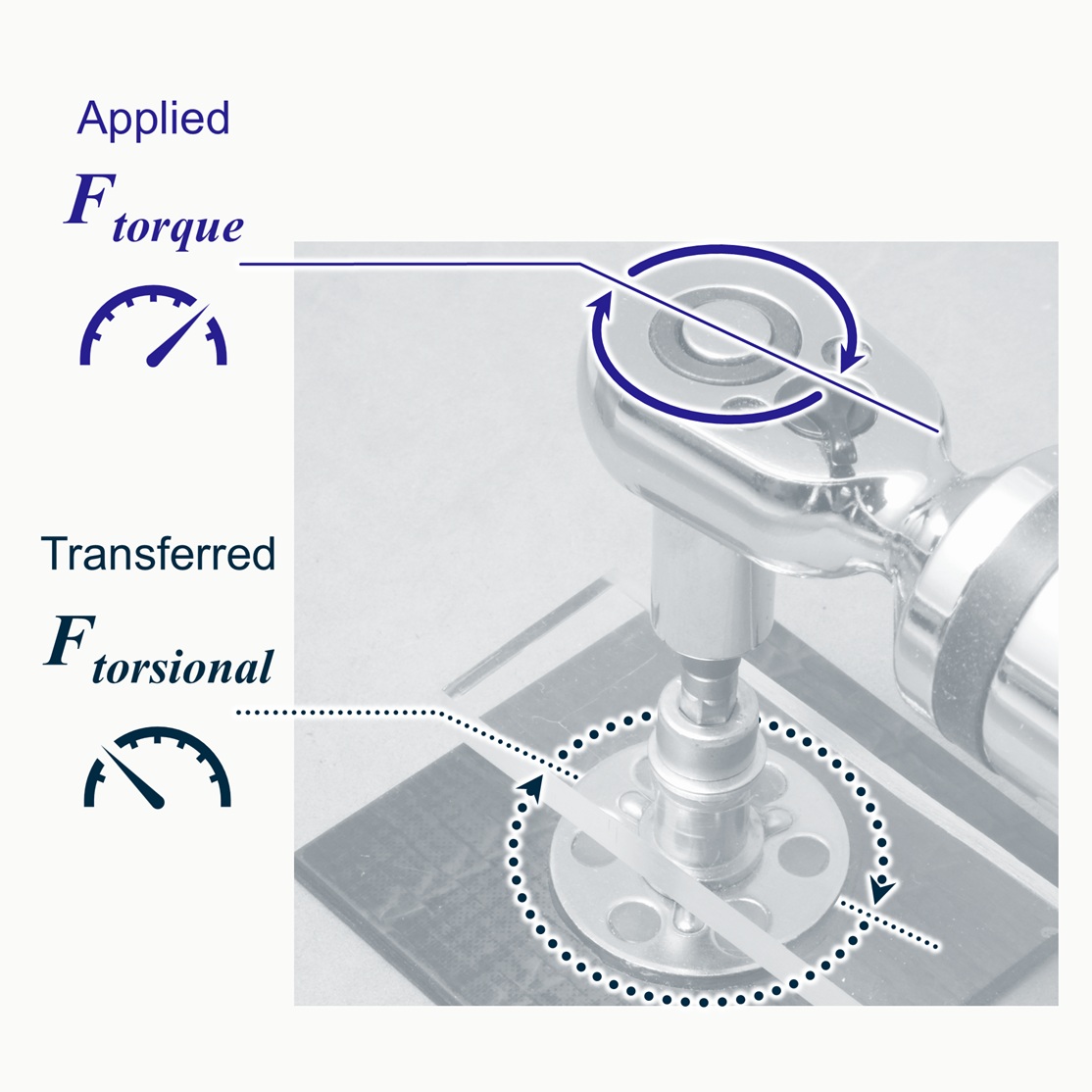
When screws are torque-tightened into a bigHead collar, a degree of rotational loading is present at the adhesive bonding or embedding interface.
However, tightening torque is an assembly input used primarily to generate preload within the fastened system. Most of the applied torque is dissipated through friction forces, with only a limited portion transferring to the bigHead embedding or surface-bonding interface.
The exact distribution depends on factors such as friction conditions, thread geometry, and joint stiffness, as addressed in bolt-calculation methodologies such as VDI 2230.
For this reason:
Adhesive bonding or embedding performance should therefore be evaluated against service load transfer and assembly survivability requirements, not solely against the ability to sustain rotational loads corresponding directly to screw torque values.
Correct fastening design and assembly control focuses on achieving sufficient preload without overstressing the collar or the embedded or surface-bonded bigHead installation.
In practice, this is best evaluated through system-representative assembly trials, rather than coupon-based rotational testing of the bigHead installation in isolation.
No. There is no property class hierarchy for screw and collar pairings. Compatibility depends on preventing internal thread overstressing through engagement and tightening control, not on screw grade alone.
To use a higher-strength screw with a bigHead collar, you must be prepared to manage the assembly tightening through careful torque and preload control. This may involve VDI 2230 based bolt-calculations, depending on your application requirements.
Our assembly guide will help you define torque and preload limits for our collar products.
No. Torque tables for standardised fastening elements may not account for the bigHead collar thread loadability. Maximum recommended tightening torques for the bigHead product must take precedence.
Adhesives and embedment interfaces primarily transfer clamp load and service loads into the parent structure. Testing the rotational loading resistance of the fastener installation is not the same as determining its capability to resist torque-tightening during assembly.
You should base any evaluation of torque-tightening resistance on assembly trials with system representative specimens, not torque-off or torque-out testing of rotational-loading specimens.
No. Reliable fastening with bigHead collar products does not depend on identifying a single ‘correct’ screw pairing. In most cases, there is a range of suitable screws that can be used successfully.
Fastening performance is governed by internal thread loadability, thread engagement, and tightening control. When these factors are managed appropriately, variations in screw grade or property class are unlikely to be the determining factor in pairing compatibility with bigHead collars.